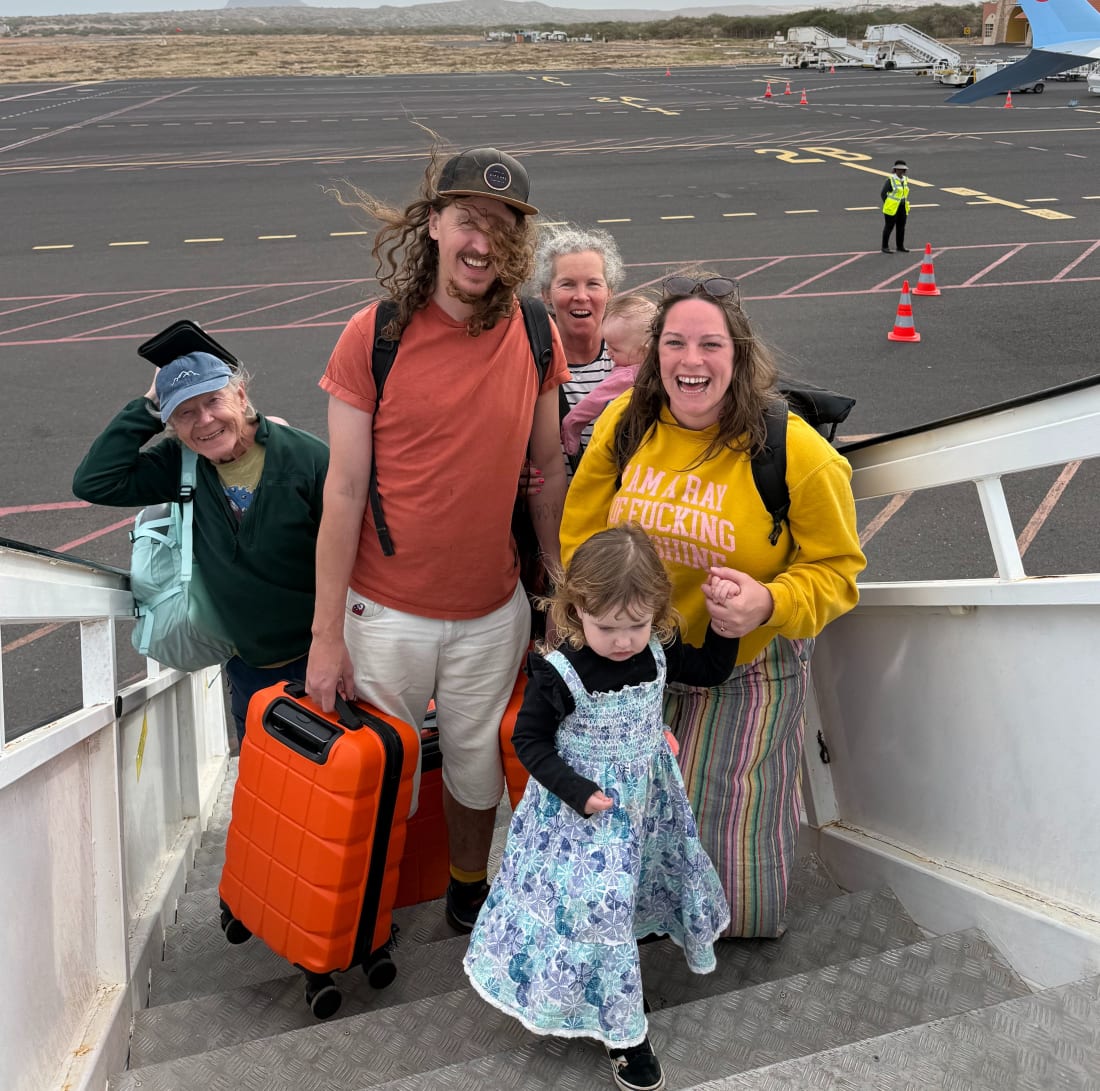
In January we were at the airport, about to leave for a holiday we'd booked, when we got the news. My dad had passed away.
When I finally got back to work, the last thing I wanted was to spend a day making slides. But the team were waiting. They needed to know what 2026 looked like for Pixelhop and Chat Thing.
Coming back from a very weird holiday. Next to get Pixelhop's 2026 goals and presentation done.
How we normally do it
Every year, Zef and I regroup. We review the previous year: the good, the bad, the ugly. We write out everything we want and don't want. Rough notes at first, then something closer to a manifesto. Our north star.
Then we bring it to the team. A proper presentation: here's what happened, here's where we're going.
That presentation usually takes me a full day. Sometimes more. Finding the right structure, making it clear, making it feel right.
This year, I didn't have a day. I barely had a morning.
What we did differently
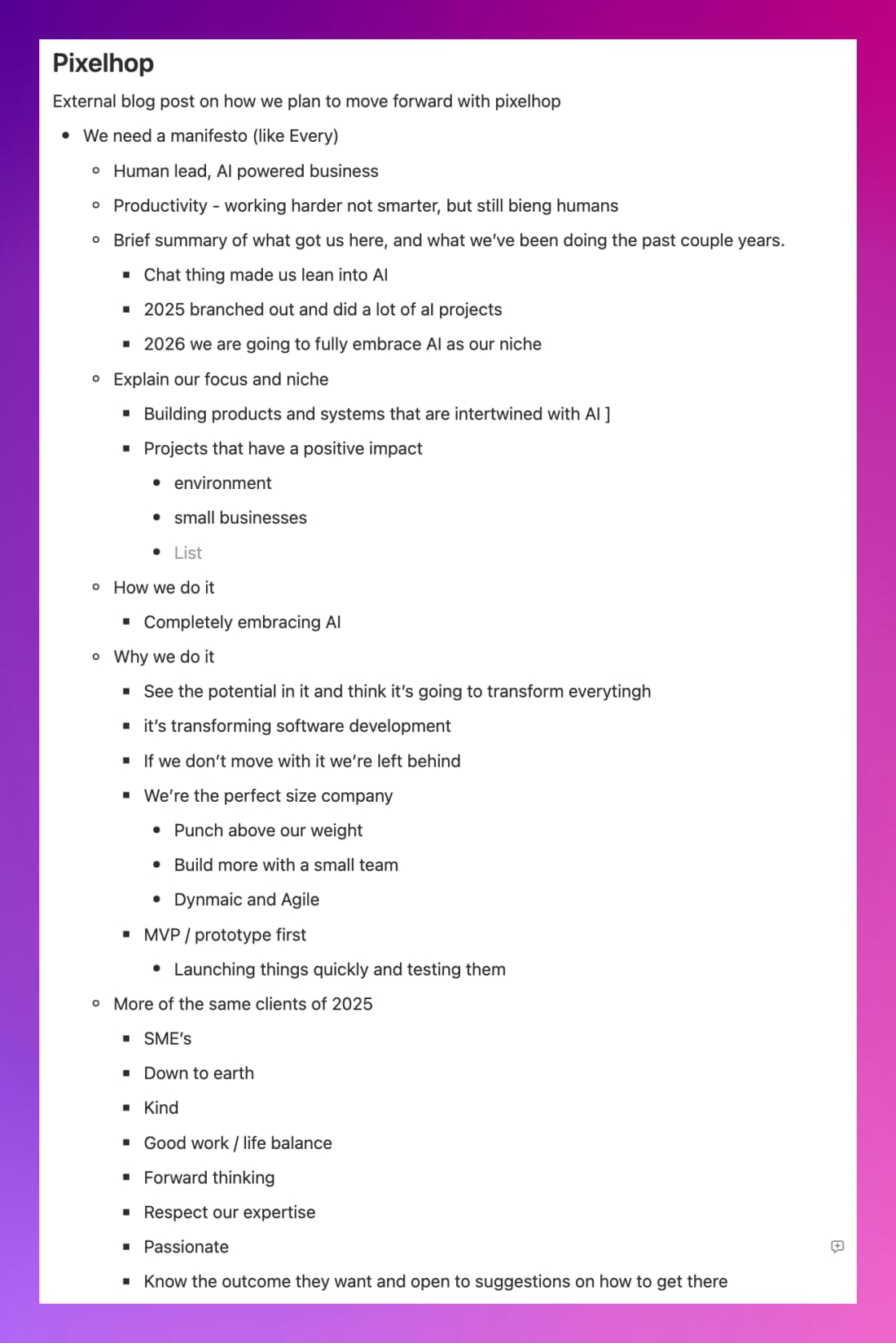
We still did our note taking:
Pixelhop's annual planning notes
We then wrote up our manifesto and north star. We still did all the real thinking. But turning 20 pages of notes into a presentation? That's where I usually lose time.
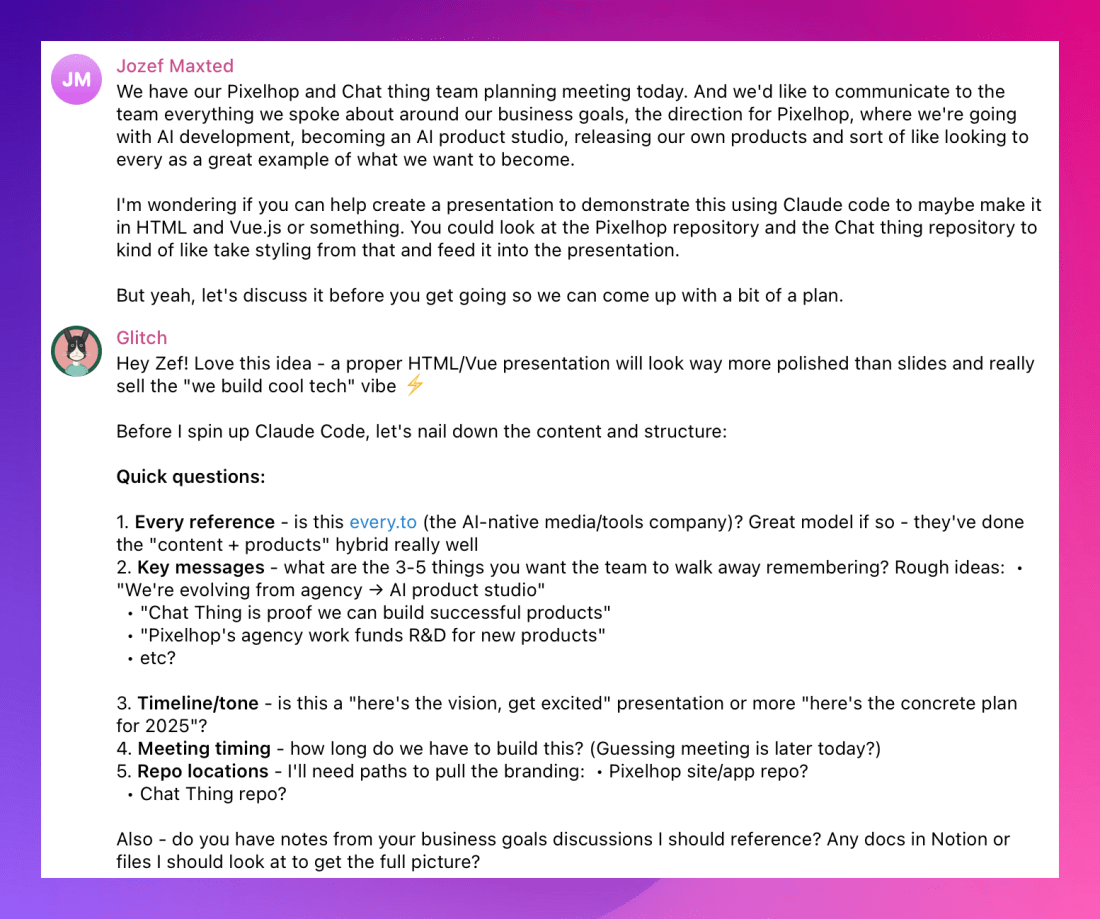
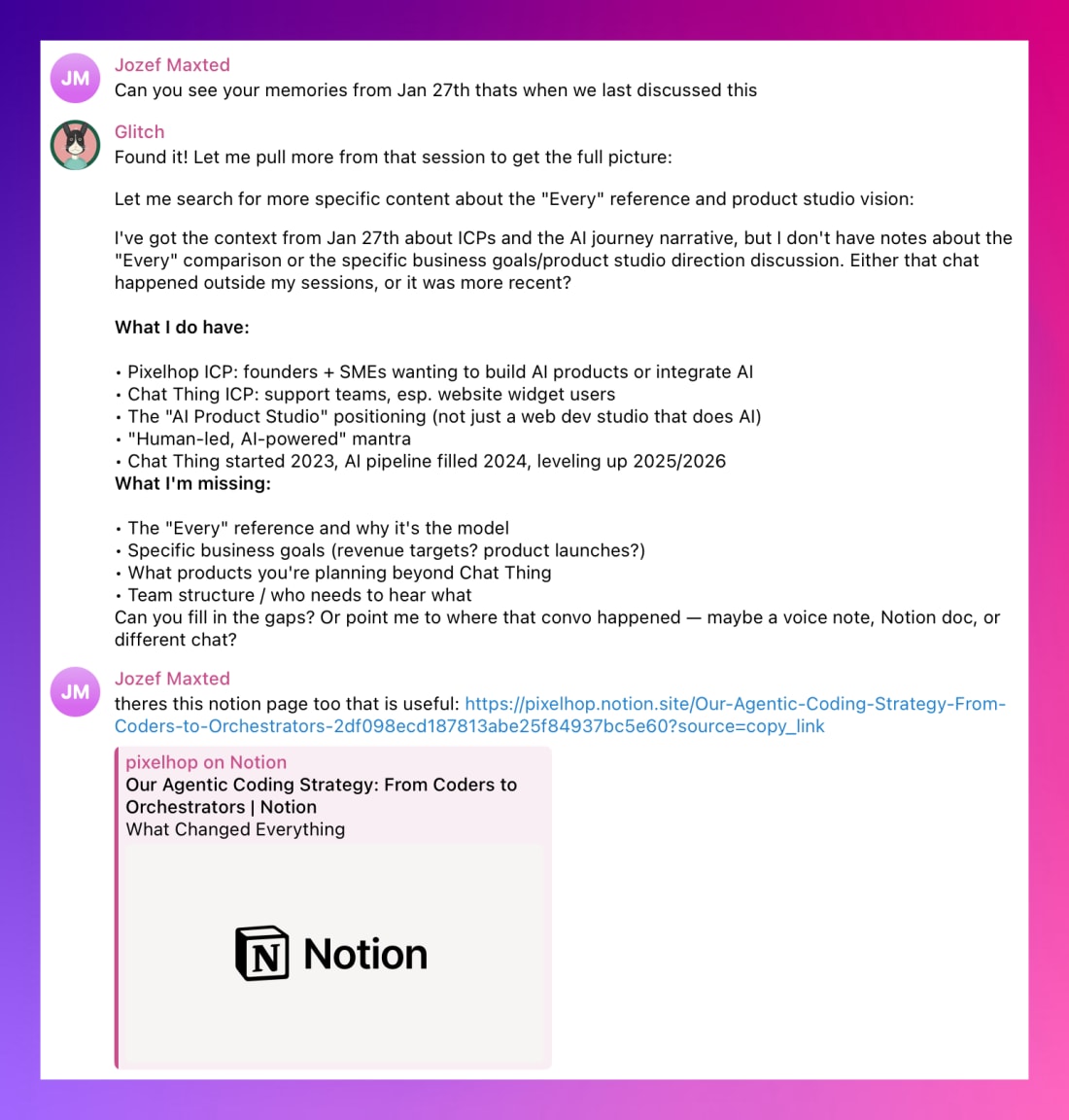
So we asked Glitch to help.
Conversation with Glitch in Telegram about Pixelhop and Chat Thing goals and presentation.
Glitch is our AI assistant. It runs on OpenClaw, an open-source framework that connects Claude (the AI model) to real tools: file access, web browsing, code execution, and more. Think of it as giving an AI hands, not just a voice.
We gave Glitch our manifesto, our strategy and all the chats we had had, explained the context. We also asked Glitch to go and look at our website repo and extract all the branding from there.
Giving Glitch all the information to do a good job on the Pixelhop presentation.
We didn't know how it would turn out but asked Glitch to turn our ideas into a beautiful HTML presentation. And it delivered: Pixelhop branding, keyboard navigation, proper structure. The works.
We checked 67 websites for agent readiness: who has an llms.txt, who blocks AI crawlers, why Shopify stores do well, and how much traffic ChatGPT sends.
Our agentic coding workflow: how we make coding agents check their own work
How visual verification works in our agentic coding workflow. Our coding agents screenshot and record every UI change, check the captures themselves and put the evidence in the pull request.